Capabilities
Legacy & Community Integration — Programs That Leave the Destination Better
Muisca™ Travel & Events builds legacy into programs at the sourcing, gifting, staffing, and experience-design level.
Wayuu artisan partners in La Guajira weave welcome gifts through direct sourcing. Single mothers’ cooperatives in Huila craft Iraca palm fans by hand. Aguadeño hat makers in Caldas create accessories with real provenance. Don Camilo’s sauces, produced by madres cabeza de hogar, appear on welcome tables because local sourcing is built into the operating logic. On larger programs, local performers, makers, and cultural hosts are integrated with intention, proper credit, and ongoing relationships.
Best fit
Where this capability carries the most value
- Built inside one Colombia operating structure instead of split across disconnected vendors.
- Connected to destination logic, proof, and proposal flow from the first click.
- Designed for briefs that need cultural depth and calm operational control at the same time.
- Strongest when buyers need one accountable team from design logic to delivery.
Communities as Partners, Not Props
How Does Muisca Support Local Communities?
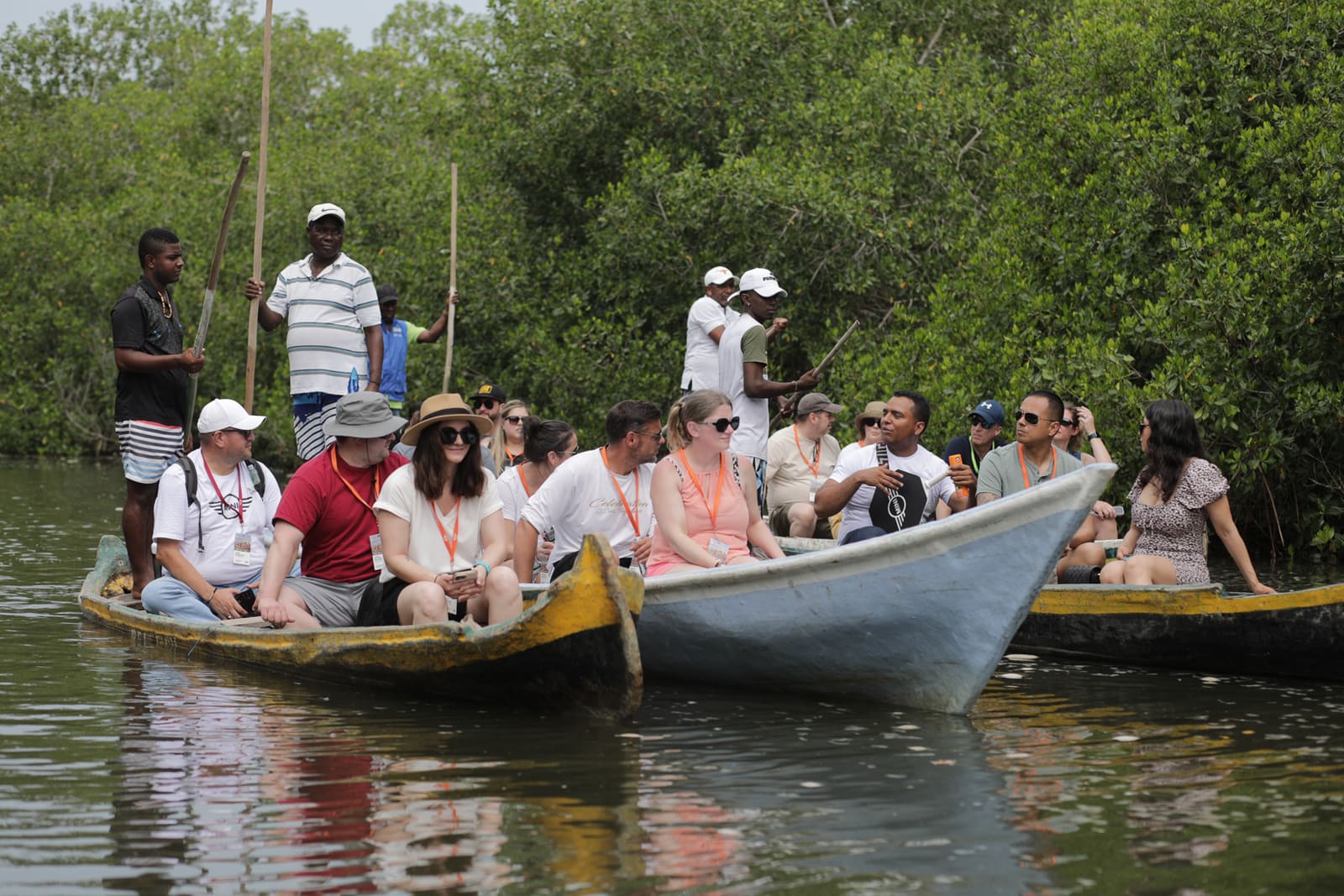
Community integration at Muisca begins with direct relationships. Artisans, cooperatives, neighborhood hosts, musicians, dancers, and makers are brought in where their work genuinely strengthens the program, with proper sourcing, clear credit, and respect for how they want to be represented.
The Wayuu Partnership
What Is Muisca’s Relationship with the Wayuu Community?
Muisca maintains a direct sourcing relationship with Alicia’s weaving network in La Guajira. The partnership is grounded in craft continuity and commercial respect: original pieces are commissioned from the source, timelines honor the labor involved, and the story is introduced through provenance rather than folklore. Last year, Muisca sourced 1,500 original handwoven bags through this partnership.
Measurable Sustainability
What Sustainability Results Has Muisca Achieved?
The model is designed to keep value in the destination and reduce avoidable waste. That includes direct sourcing for gifts and table elements, partnerships with cooperatives in Huila, more than 150 local performers, makers, and cultural hosts integrated into a single program, roughly 15,000 people reached across Colombia in three years, and a 90% reduction in single-use plastics across operations.
What Makes This Different
Why Choose Muisca for Legacy & Local Integration?
Many companies describe sustainability in abstract terms. Muisca treats it as operating design: who is sourced directly, who is credited properly, what is procured locally, how waste is reduced, and how much value stays in the destination. The strength is not in the rhetoric. It is in the structure.
Muisca read
The job is not to stack activities. It is to build a Colombia program that feels authored, controlled, and specific to the client.
James Gallego, CEO
Explore Further
Want programs that leave the destination better?
Tell us about your program. We respond within 48 hours.
Request a ProposalFrequently Asked Questions
What Planners Ask About Legacy & Local Integration
Muisca works through direct relationships with artisan partners in La Guajira, cooperatives in Huila, and local performers, makers, and cultural hosts across Colombia. The point is not to add a symbolic community layer, but to source and design programs so more value stays in the destination.
Yes. At Muisca, sustainability is operational. It shapes sourcing decisions, gifting, food logic, waste reduction, and the way local partners are integrated into the guest experience, including a measured 90% reduction in single-use plastics across operations.
Muisca maintains a direct sourcing relationship with Alicia’s weaving network in La Guajira. The partnership is built on craft continuity, fair commissioning, and long-term commercial respect, with 1,500 original handwoven bags sourced through the relationship last year.
It gives the work real provenance. Gifts carry a clear source, hospitality feels rooted rather than generic, and guests encounter Colombia through people and practices that belong in the program instead of being added as decoration.
Key markers include roughly 15,000 people reached across Colombia in three years, a 90% reduction in single-use plastics across operations, 1,500 Wayuu bags sourced annually, and more than 150 local performers, makers, and cultural hosts integrated into a single program.